
Creating a Kids BJJ Competition Culture - Jordan Shipman (E61)
Jul 20, 2026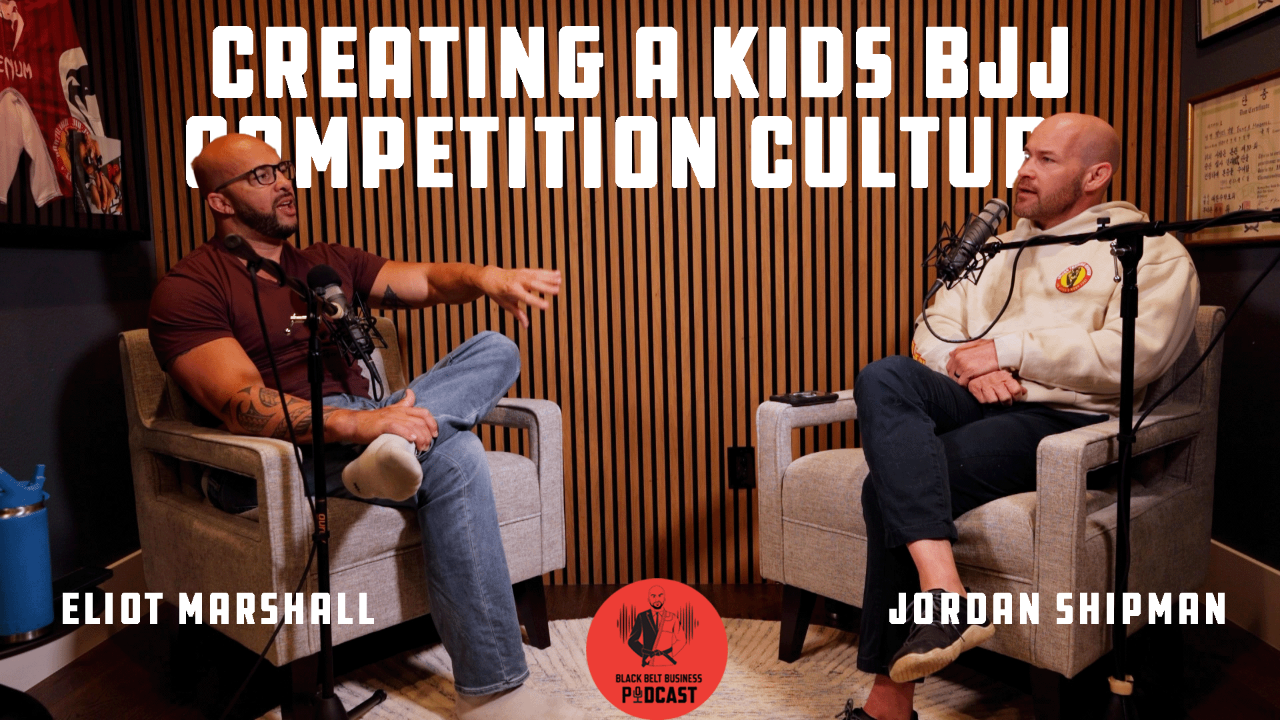
Why Competition Is the Missing Piece in Most Kids Martial Arts Programs
Based on Episode 61 of the Black Belt Business Podcast
Many martial arts schools say they value competition, yet very few build a culture around it.
The result?
Kids train for years without ever testing themselves.
Parents don't fully understand the value of tournaments.
Competition teams stay small.
And schools miss one of the greatest opportunities they have to improve retention, develop character, and build an incredible community.
In the most recent episode of the Black Belt Business Podcast, Eliot Marshall and Jordan Shipman explain why Easton has made competition a central part of its kids program, and why it has transformed the culture across every academy.
Kids Want to Play the Game
Adults and kids join martial arts for very different reasons.
Adults often come for fitness, self-defense, stress relief, or community.
Kids?
Kids want to play. They want to test themselves. They want to see if what they're learning actually works.
Nobody signs up for baseball just to attend practice forever. The game is what gives practice meaning.
Martial arts is no different.
Competition gives kids a reason to train, a goal to chase, and an experience they can look forward to throughout the year.
Competition Is About More Than Winning
One of the biggest misconceptions surrounding tournaments is that they're only valuable if a child wins.
That's not how Easton approaches competition.
The real value lies in everything that surrounds it.
Learning how to prepare. Managing nerves. Supporting teammates. Handling defeat with humility. Winning with respect.
Building confidence by doing something difficult.
Those lessons last far longer than any medal.
Years later, very few people remember every match they won.
They remember the teammates, the coaches, the road trips, the nerves before stepping on the mat, and the shared experiences that came with chasing a goal together.
That's what creates lifelong martial artists.
You're Competing With Every Other Sport
Many school owners believe they're competing against the martial arts academy across town.
They're not.
They're competing against soccer, baseball, gymnastics, basketball.
Every youth activity that creates memorable experiences for kids and families.
Those sports don't just provide instruction.
They provide seasons. They give kids a sense of belonging through teams, championships, shared victories, friendships, and traditions.
If martial arts schools only offer classes while other sports offer experiences, kids will naturally gravitate toward the experiences.
Competition helps bridge that gap.
Culture Creates Competitors
One of the most important lessons from the episode is that successful competition teams don't appear by accident.
They're the result of culture.
Schools often say:
"We just don't have competitive kids."
We would like to challenge that idea.
Competitive students are developed when coaches consistently talk about competition, share their own experiences, celebrate effort, and demonstrate what growth looks like.
Competition becomes normal because the culture makes it normal.
If coaches never compete, never discuss tournaments, and never share those experiences, students rarely see competition as part of their journey.
Build a Season, Not Just a Tournament
One of Easton's biggest breakthroughs came from treating competition like every other youth sport.
Instead of randomly announcing tournaments throughout the year, we created seasons.
We select official tournaments, published a calendar, and rally the kids to particioate.
We have even created themed seasons that recognize participation and build team identity.
The result?
Students stopped viewing tournaments as isolated events.
They became part of something much bigger.
Families could plan ahead, and coaches knew what they were preparing for.
Students felt like they belonged to a team.
From then, we've seen participation explode.
Reward Effort, Not Results
One of the main principles from the episode is that of recognizing participation without confusing it with winning.
We're not talking about participation trophies, either.
Easton doesn't hand out medals for losing. Winning still matters.
But effort matters too.
Students who commit to an entire competition season earn recognition for showing up, preparing, and challenging themselves.
That's no different than earning a varsity letter in high school.
The recognition isn't for finishing first. It's for committing to the season and representing the team.
That distinction is important because it reinforces the behavior you want while still preserving the value of competition.
Coaches Lead From the Front
Culture always starts with leadership.
Coaches who continue to compete—or who actively stay involved in the competition scene—show students what growth looks like.
When kids watch their coaches challenge themselves, win, lose, and continue improving, competition becomes something to embrace rather than fear.
The lesson isn't that every instructor needs to become a world champion.
The lesson is that students should see their coaches living the values they're teaching.
Leadership creates belief. Belief creates culture. Culture creates competitors.
Celebrate the Courage to Compete
Perhaps the most powerful tradition Easton has developed is "Medal Madness Monday."
After every tournament, competitors bring their medals to class and share what they learned.
Interestingly, the biggest celebrations often aren't reserved for the champions.
They're for the students who competed for the very first time.
Stepping onto the mat takes courage. That courage deserves recognition.
When younger students see first-time competitors celebrated regardless of the outcome, they begin to believe they can do it too.
That's how participation grows year after year.
Competition Is a Tool for Growth
Not every student will become a champion. That's fine. Not every student needs to.
Competition isn't valuable because it creates elite athletes. Rather, it's valuable because it creates resilient people.
Kids learn how to deal with pressure. They learn how to lose and how to win with humility.
They build friendships and create memories they'll talk about for decades.
Those lessons extend far beyond the tournament mat.
The schools with the strongest competition programs aren't simply producing better competitors.
They're producing stronger cultures.
And in the long run, that's what keeps students training for years instead of months.
Get the Easton.Online Podcast directly to your inbox!
Enter your details below to get email notifications when new episodes get published.
We hate SPAM. We will never sell your information, for any reason.


